Pear Varieties for the Pacific Northwest
Pears are among the best fruit trees for the Pacific Northwest. Here's what we're planting at Nadeau Farms and why pears are such a reliable choice for the Palouse.
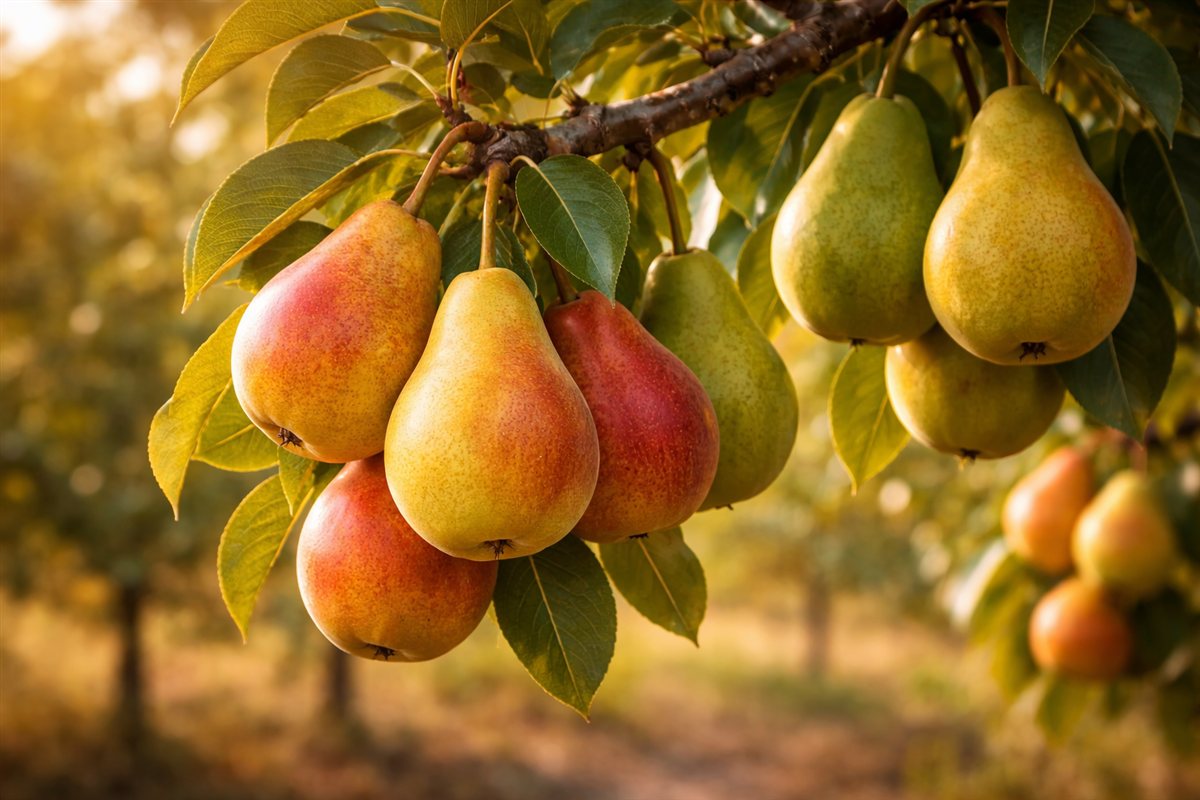
Why Pears Do So Well Here
The Pacific Northwest — including Eastern Washington — is one of the best pear-growing regions in North America. Oregon and Washington together produce over 80% of the nation's pears. Pear trees are naturally long-lived, cold-hardy, and resistant to many diseases that plague other fruit trees. Our Pullman climate provides the chill hours pears need (600–900 hours below 45°F) and the summer warmth for proper ripening.
European Pears
European pears (the classic pear shape) are picked firm and ripen off the tree. They actually develop better flavor and texture when picked before fully ripe. This is ideal for u-pick — you take them home firm and let them ripen on the counter.
Bartlett
Harvest: August–September · Flavor: Sweet, aromatic, buttery
The classic American pear — for many people, this is what a pear tastes like. Bartlett is the standard for fresh eating, canning, and pear sauce. The skin turns from green to golden yellow as it ripens, giving you a built-in ripeness indicator.
D'Anjou
Harvest: September–October · Flavor: Mild, sweet, slightly citrusy
D'Anjou is a thick-skinned, versatile pear that stores exceptionally well — up to 6 months in cold storage. It's firmer than Bartlett and has a subtler flavor that makes it excellent for both eating fresh and cooking.
Bosc
Harvest: September–October · Flavor: Sweet, spiced, honey notes
Recognizable by its long, tapered neck and russeted brown skin. Bosc pears have a firm, dense flesh that holds up beautifully when baked or poached. Many people consider it the best pear for cooking.
Asian Pears
Asian pears are different from European pears in almost every way. They're round like an apple, crunchy rather than buttery, and they ripen on the tree. You eat them crisp, straight from the branch.
Hosui
Harvest: August · Flavor: Very sweet, juicy, butterscotch notes
Often rated the best-tasting Asian pear. Hosui (meaning "abundant juice" in Japanese) lives up to its name with incredibly juicy, sweet flesh. The golden-brown skin has a rustic, russeted appearance.
Shinseiki
Harvest: August · Flavor: Mild, sweet, refreshing
A bright yellow variety sometimes called "New Century." Shinseiki has smooth, thin skin and a mild, refreshing flavor. It's a prolific producer and one of the easiest Asian pears to grow in cooler climates.
Pollination
Most pear varieties need a different variety for cross-pollination. European and Asian pears can pollinate each other if they bloom at the same time. Bartlett and D'Anjou are excellent mutual pollinators. Having multiple varieties in our orchard ensures good fruit set across the board.